KIC 5689121*

RA 285.907827°DEC +40.941988°

A possible planet in Kepler’s old light.

A 13.77-day signal that returns in held-back observations. A hidden companion still leaves the host uncertain.
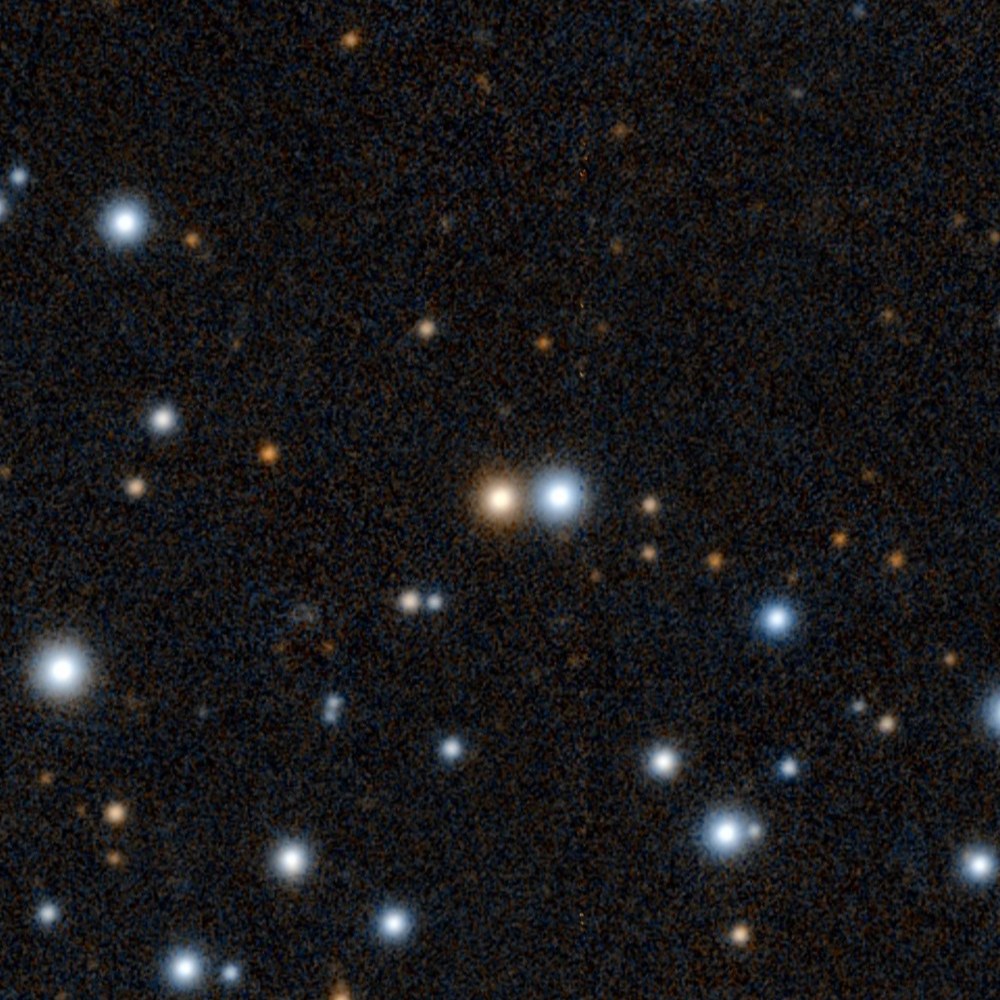
FIG. 01 / PHOTOMETRY

15-minute bins · fitted transit model

KIC 5689121 folded transitFolded Kepler photometry of KIC 5689121 with the fitted transit model, about 0.24 percent deep and 2.2 hours long.-3000-2000-100001000Flux change (ppm)-8-4048Hours from mid-transitKepler PSF flux, saved full-series fold, 15-minute binswhite line: MCMC transit model, depth about 2,400 ppm (0.24%)Transit binTransit binTransit binTransit binTransit binTransit binTransit binTransit binTransit binTransit binTransit binTransit binTransit binTransit binTransit binTransit binTransit binTransit binTransit binTransit binTransit binTransit binTransit binTransit binTransit binTransit binTransit binTransit binTransit binTransit binTransit binTransit binTransit binTransit binTransit binTransit binTransit binTransit binTransit binTransit binTransit binTransit binTransit binTransit binTransit binTransit binTransit binTransit binTransit binTransit binTransit binTransit binTransit binTransit binTransit binTransit binTransit binTransit binTransit binTransit binTransit binTransit binTransit binTransit binTransit binTransit binTransit bin
Stack the observations on a 13.77-day clock: a dip emerges. White line: transit model. Bars: uncertainty.
Kepler measurements Transit model
FIG. 02 / TARGET FIELD120″
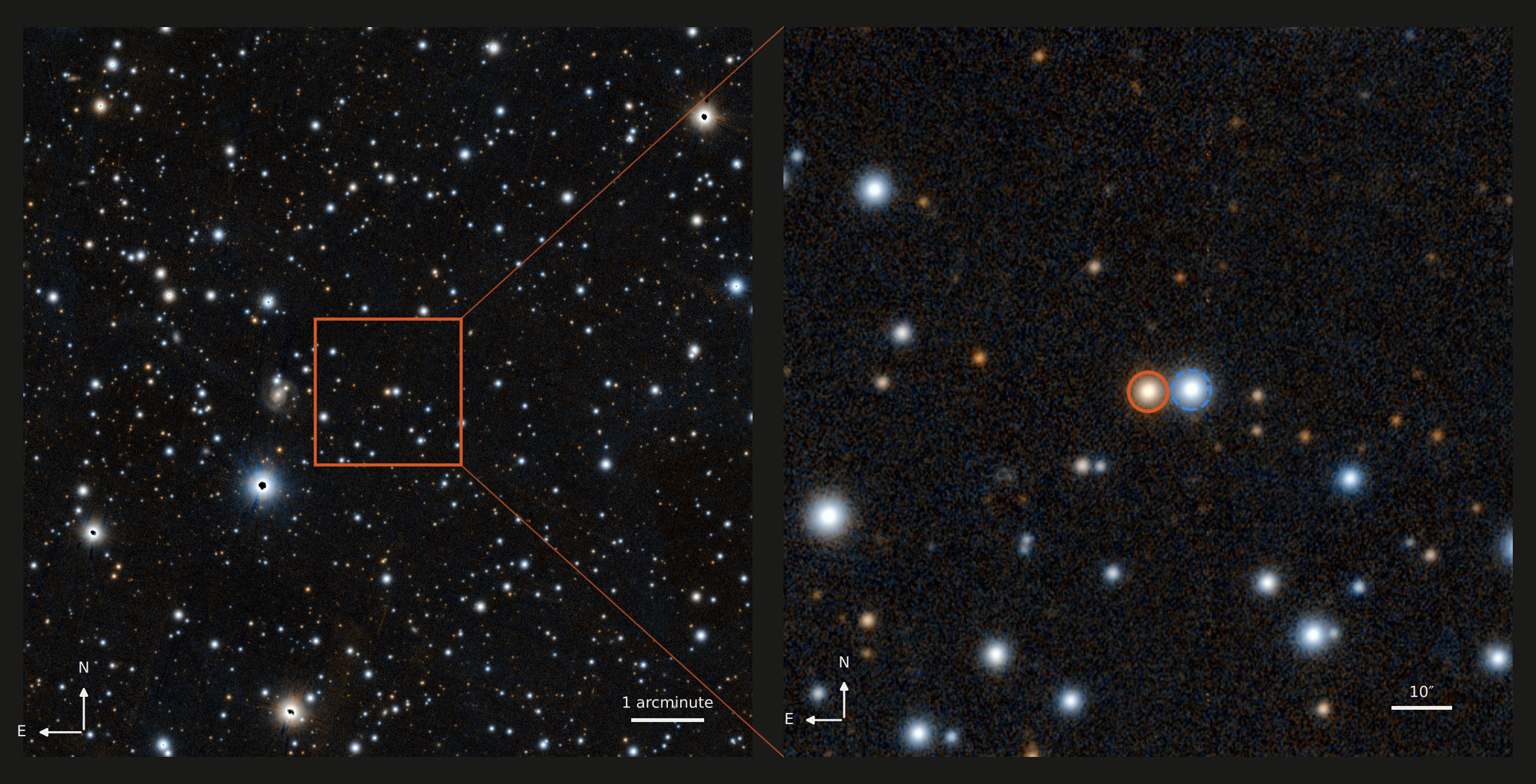
Real Pan-STARRS colour image of the star field around KIC 5689121. The candidate host and its brighter neighbour sit near the centre. Target / M dwarf at the centre; brighter neighbour 7.1 arcseconds west, to the rightKIC 5689121Target / M dwarf20″NE
Pan-STARRS DR1 · 2′ field
Solid: host star. Dashed: brighter neighbour, 7.1″ away. Pan-STARRS1 / STScI via CDS.
A dip every13.77 dayspossible orbital period
Starlight lost0.18–0.24%depends on extraction method
Each dip lasts2.1–2.4 hours
Light travels~972 yearsestimated distance: 298 pc
Held-back dataRecoveredin four reserved quarters

Hidden in plain sight.

Recorded in passing.

Kepler Bonus recovered this star’s light from pixels downloaded for its neighbour. The method ↗

Two stars. Blended light.

Just 7.1″ apart. Separating the stars’ blended light reveals a deeper dip on this one. The source tests ↗

A suspiciously similar clock.

13.767 days for Kepler-169 e. 13.769 here. Almost identical periods; none of their transits overlap. Timing comparison ↗

01 / Measurement record

One clock.
Four years of observations.

Predict the dip using earlier data. Look in four untouched quarters. Find it again.

FIG. 03 / QUARTER COVERAGE
Kepler observation baselineEach horizontal interval spans the first to last available sample in a quarter; small internal gaps are not shown. Vertical marks are exported event times. Bright intervals are reserved quarters. Right column lists cadence and event counts.-2000-1750-1500-1250-1000-750BTJD = BJD TDB − 2,457,000Q11,450 / 2Q23,690 / 6Q33,876 / 7Q43,844 / 5Q63,976 / 6Q73,931 / 7Q82,956 / 5Q103,950 / 7Q113,884 / 6Q123,267 / 6Q144,051 / 6Q154,213 / 6Q163,435 / 5samples / eventsQuarter 1Event -48 / Q1Event -47 / Q1Quarter 2Event -45 / Q2Event -44 / Q2Event -43 / Q2Event -42 / Q2Event -41 / Q2Event -40 / Q2Quarter 3Event -39 / Q3Event -38 / Q3Event -37 / Q3Event -36 / Q3Event -35 / Q3Event -34 / Q3Event -33 / Q3Quarter 4Event -32 / Q4Event -31 / Q4Event -28 / Q4Event -27 / Q4Event -26 / Q4Quarter 6Event -18 / Q6Event -17 / Q6Event -16 / Q6Event -15 / Q6Event -14 / Q6Event -13 / Q6Quarter 7Event -12 / Q7Event -11 / Q7Event -10 / Q7Event -9 / Q7Event -8 / Q7Event -7 / Q7Event -6 / Q7Quarter 8Event -4 / Q8Event -3 / Q8Event -2 / Q8Event -1 / Q8Event 0 / Q8Quarter 10Event 8 / Q10Event 9 / Q10Event 10 / Q10Event 11 / Q10Event 12 / Q10Event 13 / Q10Event 14 / Q10Quarter 11Event 16 / Q11Event 17 / Q11Event 18 / Q11Event 19 / Q11Event 20 / Q11Event 21 / Q11Quarter 12Event 22 / Q12Event 23 / Q12Event 24 / Q12Event 25 / Q12Event 26 / Q12Event 27 / Q12Quarter 14Event 35 / Q14Event 37 / Q14Event 38 / Q14Event 39 / Q14Event 40 / Q14Event 41 / Q14Quarter 15Event 42 / Q15Event 43 / Q15Event 44 / Q15Event 46 / Q15Event 47 / Q15Event 48 / Q15Quarter 16Event 51 / Q16Event 52 / Q16Event 53 / Q16Event 54 / Q16Event 55 / Q16
Ticks mark dips; white rows were held back from the search. Bars span each quarter, omitting internal gaps. Hover or tap to inspect.
FIG. 04 / FIT RESIDUALS

What does the model leave behind?

Fold minus saved transit modelResiduals of the 67 exported 15-minute bins after linear interpolation of the saved median model. This is a display diagnostic, not a refit or independent goodness-of-fit test.-8-4048Hours from mid-transit-2000-1000010002000Residual (ppm)Fold residualFold residualFold residualFold residualFold residualFold residualFold residualFold residualFold residualFold residualFold residualFold residualFold residualFold residualFold residualFold residualFold residualFold residualFold residualFold residualFold residualFold residualFold residualFold residualFold residualFold residualFold residualFold residualFold residualFold residualFold residualFold residualFold residualFold residualFold residualFold residualFold residualFold residualFold residualFold residualFold residualFold residualFold residualFold residualFold residualFold residualFold residualFold residualFold residualFold residualFold residualFold residualFold residualFold residualFold residualFold residualFold residualFold residualFold residualFold residualFold residualFold residualFold residualFold residualFold residualFold residualFold residual
Zero means the model matches. Departures show what it leaves unexplained.
FIG. 05 / EVENT DISTRIBUTION

How much does each dip vary?

Distribution of all exported event depthsEvent counts in 500 ppm intervals, stacked by discovery and reserved quarter selections. Scatter is visible even though the stacked transit is precise; this histogram is not an independent significance test.-200002000400060008000Event depth (ppm)05101520Number of eventsSearch quartersReserved quarters-2,000 ≤ depth < -1,500 ppm-1,500 ≤ depth < -1,000 ppm-1,000 ≤ depth < -500 ppm-500 ≤ depth < 0 ppm0 ≤ depth < 500 ppm500 ≤ depth < 1,000 ppm1,000 ≤ depth < 1,500 ppm1,500 ≤ depth < 2,000 ppm2,000 ≤ depth < 2,500 ppm2,500 ≤ depth < 3,000 ppm3,000 ≤ depth < 3,500 ppm3,500 ≤ depth < 4,000 ppm4,000 ≤ depth < 4,500 ppm4,500 ≤ depth < 5,000 ppm5,000 ≤ depth < 5,500 ppm5,500 ≤ depth < 6,000 ppm6,000 ≤ depth < 6,500 ppm6,500 ≤ depth < 7,000 ppm7,000 ≤ depth < 7,500 ppm7,500 ≤ depth < 8,000 ppm8,000 ≤ depth < 8,500 ppm8,500 ≤ depth < 9,000 ppm
Individual dips vary; stacking reveals the signal. White: held-back observations. Bins: 500 ppm.
The held-back test / exact counts and selection
74 / 23

Exported / reserved events.

70 / 22

Accepted / reserved after the stricter vetting cut.

67 × 15 min

Full-data bins used for the displayed fold.

The initial search reserved the last four quarters. Its fixed ephemeris recovered the signal at 5.84σ in aperture photometry, with 22 accepted events and no single event dominating. The newer full-baseline fit uses all quarters. Aperture audit / Display selection notes.

How to read the plots / units and limits

One part per million (ppm) is 0.0001% of the star’s light. Error bars show ±1σ uncertainty unless labelled otherwise. A Kepler quarter is one observing segment, usually about three months. PSF photometry separates overlapping star images; SAP adds the light inside a pixel aperture.

All charts display saved results. The full-data fold, its residuals and the event histogram summarise the same observations; they are not new fits or independent confirmations. Several source tests also share photons, so their significance cannot be multiplied together.

χ² measures disagreement with a model; a larger value means a worse fit. The associated p-values are model checks, not probabilities that a planet exists. The separate false-positive calculation depends on its assumptions and inputs.

Evidence snapshot: 11 October 2026. Full methods and qualifications ↗

When this light left the star~1040 CE

Nearly a millennium in flight.

This light travelled for ~972 years before Kepler recorded it in 2009–2013. A possible planet’s shadow, arriving centuries later.

Approximate, from the estimated 298 pc distance. Calculation ↗

02 / A possible world

Beyond the light curve.

If the signal belongs to this star, it points to a warm sub-Neptune. These artist’s interpretations use the inferred size and orbit; appearance and interior remain unknown.

Four views / artist’s interpretations

Inside a quarter of Mercury’s orbit

Orbital distances to scale: 0.0896 AU candidate versus 0.387 AU Mercury; comparison around a common schematic centreCandidate0.090 AUMercury’s orbital distance · 0.387 AU
Orbital distances across two systems, to scale. Bodies schematic; motion shows one day per second.

Change the reflectivity.

417 Kequilibrium temperature
0%

T = 417.4 × (1 − A)¼ K. Full heat redistribution; atmosphere and surface temperature unknown.

Derived comparisons ↓ · Saved model ↗

Geometry, equations and fitted parameters
Orbit / Kepler’s third law

a = (GM⋆P² / 4π²)⅓

0.08956 AU
Size / transit geometry

Rₚ = (Rₚ/R⋆) × R⋆

~2.5–3 R⊕
Received starlight

S/S⊕ = (L/L☉) / a²AU

5.0397 × Earth
Fitted parameterMedianLower / upper uncertaintyMeaning
P13.769448 d−0.000064 / +0.000066 dPeriod, full-baseline PSF MCMC
T₀2455630.245431−0.001969 / +0.002008 dReference transit, BJD TDB
Rₚ / R⋆0.04601−0.00212 / +0.00377Radius ratio
b0.498−0.333 / +0.289Impact parameter
ρ⋆ / ρ☉4.438−2.827 / +2.296Transit-inferred stellar density
a / R⋆39.711—Orbit separation / stellar radius

Medians and asymmetric errors: key_numbers.json.

Between Earth and Neptune in size

Radii to scale: Earth 1, candidate 2.5 to 3, Neptune 3.88 Earth radiiEarthCandidateNeptune
Outlines span 2.5–3 R⊕. A gaseous composition is plausible, not measured.

A much larger sun in its sky

Angular diameters: our Sun 0.533 degrees, candidate host 3.02 degreesOur Sun · 0.53°Its star · 3.02°
5.7× our Sun’s apparent width from Earth.
Illustration assumptions and sources

AI-generated artist’s interpretations, not telescope images or physical simulations. The exterior, clouds and layer structure are possible scenarios. Rings, moons, a spin state and additional planets are not established. The system view uses perspective; cutaway layers are not to scale.

Image prompts and assumptions · Transit and stellar inputs · NASA / Neptunian planets · Sub-Neptune interior review

03 / Spatial record

Where in the sky is it?

Optical and infrared surveys. North up; east left.
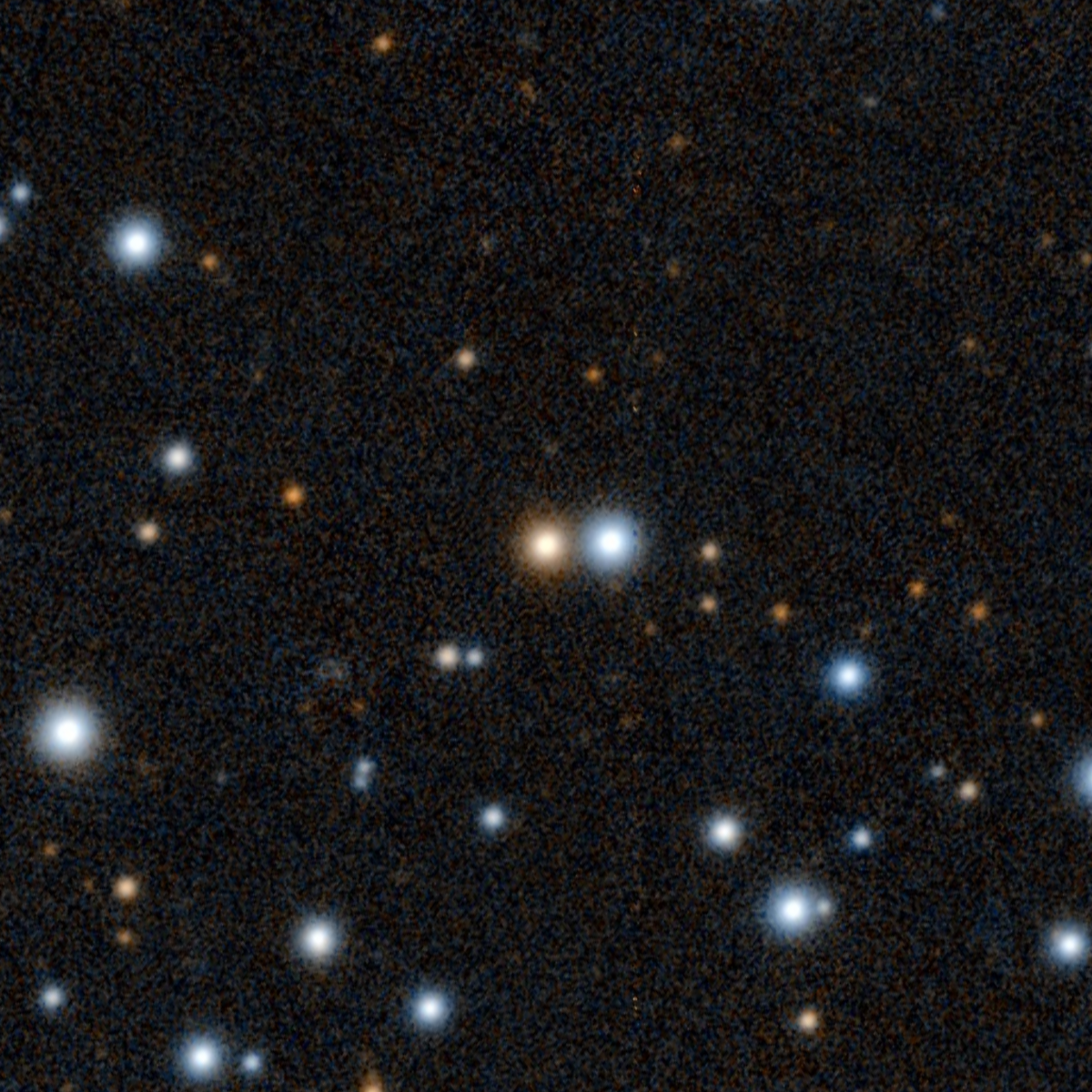
Pan-STARRS DR1 colour image centred on KIC 5689121, two arcminutes wide
Pan-STARRS1 / STScI via CDS. Solid: host. Dashed: KIC 5689116.

The neighbour is 2.1× brighter than the host in Gaia G.

Open original survey render ↗

RA 19h 03m 37.9s · Dec +40° 56′ 31″
ICRS 285.907827°, +40.941988°

Explore from all-sky to this star in Aladin ↗

A red dwarf in Lyra

Catalogue namesKIC 5689121
TIC 120686465
Gaia DR3 source2103792461826460288
Distance~298 pc / ~972 ly
Effective temperature3,633 K (TIC)
Radius / mass0.507 R☉ / 0.505 M☉
BrightnessG 16.282 / Kp 16.332
Gaia RUWE0.984

Close on the sky.

These images show the stars, not the candidate planet. Its presence is inferred from a tiny change in the host’s light.

Kepler-169 lies 4.39′ away on the sky; a physical connection is not established.
Stellar parameters ↗ · Image registration ↗

Locate it in Lyra and compare the original image panels
The candidate in constellation LyraSchematic sky locator using approximate bright-star coordinates. Vega and five other familiar Lyra stars orient the candidate; this is not a telescope image.288286284282280278Right ascension (degrees, east to the left)323436384042Declination (degrees)Vegaε Lyrζ Lyrδ² LyrSheliakSulafatKIC 5689121Too faint for the unaided eye
Schematic locator using the approximate bright-star coordinates preserved in the original plotting code. Diagram axes are RA/Dec; connecting lines are constellation guides.
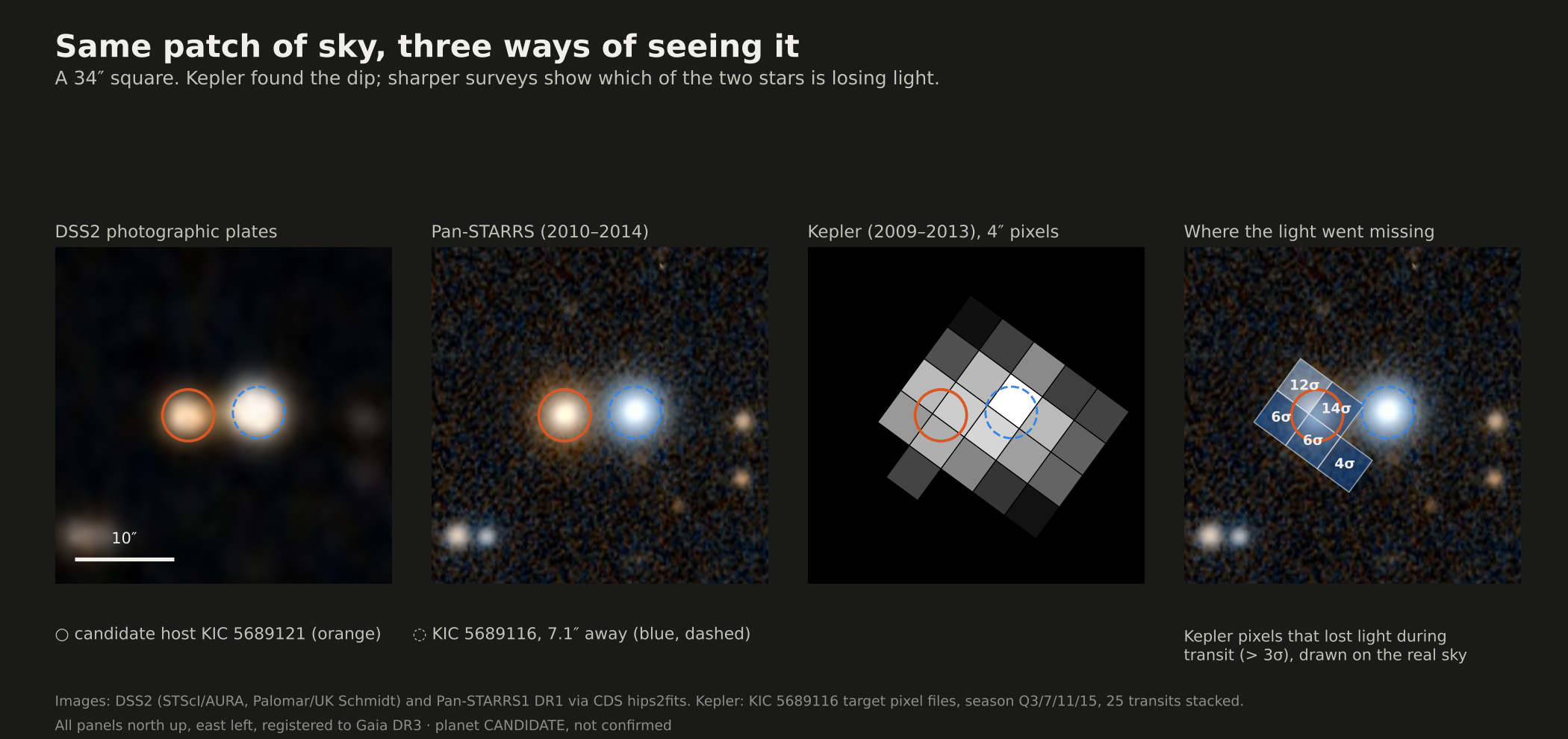
The same 34 arcsecond patch in DSS2, Pan-STARRS, Kepler pixels and a missing-light map
The same 34″ patch across instruments and a difference image.
Registered Pan-STARRS 10 arcminute field beside a two arcminute close-up
The original field-and-zoom pair, registered against Gaia DR3. Original presentation assets.
04 / Source tests

Which star actually dimmed?

A real dip can belong to the wrong star. Three checks point toward KIC 5689121.

FIG. 06 / SOURCE & EPHEMERIS

Does the neighbour have the same dip?

The signal is specific to this star and periodDepths and one-sigma errors from the same saved kdepth test: the candidate target is about 2348 ppm, the bright neighbour 24 ppm; folds at all five Kepler-169 ephemerides are consistent with zero. Measurement choice differs from other depth estimates.010002000Measured PSF depth (ppm)Host / candidate periodNeighbour / candidate periodHost / Kepler-169 bHost / Kepler-169 cHost / Kepler-169 dHost / Kepler-169 eHost / Kepler-169 fHost / candidate periodNeighbour / candidate periodHost / Kepler-169 bHost / Kepler-169 cHost / Kepler-169 dHost / Kepler-169 eHost / Kepler-169 f
Host: a 2,348 ppm dip. Neighbour: consistent with zero; ~1,100 ppm needed. Known Kepler-169 timings also give no significant dip.
FIG. 07 / CENTROID PREDICTIONS

Where does the missing light come from?

Centroid predictions by quarterTwelve separate quarter rows compare measured column and row shifts, with one-sigma errors, to target and neighbour predictions. Filled circles are measurements, open circles target predictions, squares neighbour predictions. Column and row axes use different labelled scales.QUARTER● measured ±1σ○ target▪ neighbour01234Column shift (millipixels)-1-0.500.51Row shift (millipixels)Q2Q3Q4Q6Q7Q8Q10Q11Q12Q14Q15Q16Quarter 2 / centroidQuarter 3 / centroidQuarter 4 / centroidQuarter 6 / centroidQuarter 7 / centroidQuarter 8 / centroidQuarter 10 / centroidQuarter 11 / centroidQuarter 12 / centroidQuarter 14 / centroidQuarter 15 / centroidQuarter 16 / centroid
The shifting centre of light better matches a fading target than a fading neighbour. One quarter per row, ±1σ errors. The simple model remains imperfect (p = 0.008).
FIG. 08 / LIGHT DILUTION

Does extra light wash out the dip?

Depth per quarter, PSF versus SAPPer quarter transit depth in PSF and aperture photometry; aperture depths are shallower in quarters where the aperture holds more contaminating light.01,0002,0003,0004,000Transit depth (ppm)Kepler quarterQ1Q2Q3Q4Q6Q7Q8Q10Q11Q12Q14Q15Q16PSF / targetSAP / blended apertureQuarter 1Quarter 2Quarter 3Quarter 4Quarter 6Quarter 7Quarter 8Quarter 10Quarter 11Quarter 12Quarter 14Quarter 15Quarter 16
More neighbouring light makes the dip shallower. That is what a fading target predicts. PSF: separated star; SAP: blended light. Crowding data.
FIG. 09 / MISSING-LIGHT PIXELS

Which pixels lose light?

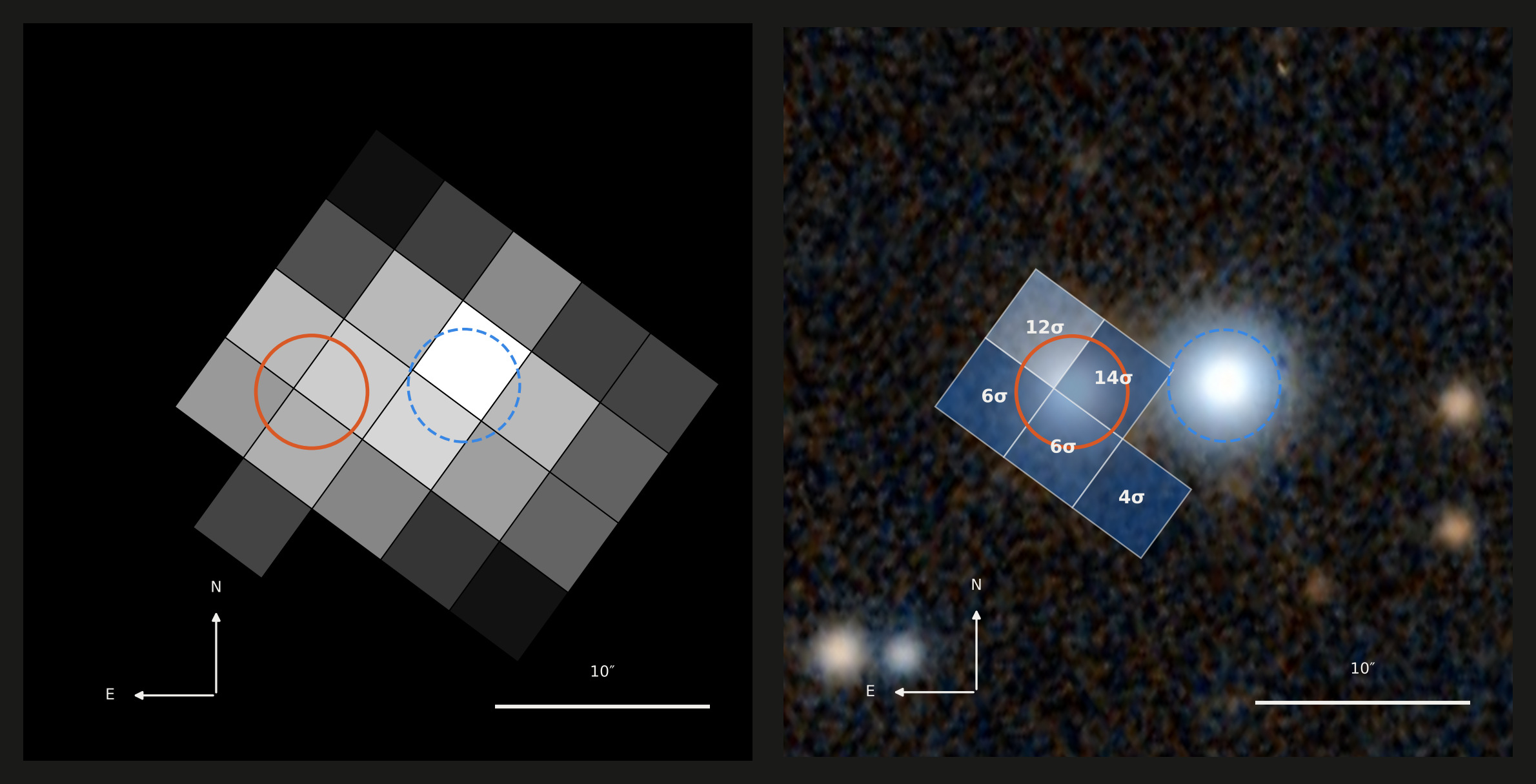
Missing-light pixels by seasonPer-pixel signal to noise of the light lost during transit in four Kepler seasons, peaking on a few pixels.Season 0372Season 161261442Season 23166324Season 31424Lost-light S/N per Kepler pixel. White ≥ 7; numbers give S/N.Stored pixel orientation; see the registered sky overlay below.Season 0 / pixel [0, 0]Season 0 / pixel [0, 1]Season 0 / pixel [0, 2]Season 0 / pixel [0, 3]Season 0 / pixel [0, 4]Season 0 / pixel [1, 0]Season 0 / pixel [1, 1]Season 0 / pixel [1, 2]Season 0 / pixel [1, 3]Season 0 / pixel [1, 4]Season 0 / pixel [2, 0]Season 0 / pixel [2, 1]Season 0 / pixel [2, 2]Season 0 / pixel [2, 3]Season 0 / pixel [2, 4]Season 0 / pixel [3, 0]Season 0 / pixel [3, 1]Season 0 / pixel [3, 2]Season 0 / pixel [3, 3]Season 0 / pixel [3, 4]Season 1 / pixel [0, 0]Season 1 / pixel [0, 1]Season 1 / pixel [0, 2]Season 1 / pixel [0, 3]Season 1 / pixel [0, 4]Season 1 / pixel [1, 0]Season 1 / pixel [1, 1]Season 1 / pixel [1, 2]Season 1 / pixel [1, 3]Season 1 / pixel [1, 4]Season 1 / pixel [2, 0]Season 1 / pixel [2, 1]Season 1 / pixel [2, 2]Season 1 / pixel [2, 3]Season 1 / pixel [2, 4]Season 1 / pixel [3, 0]Season 1 / pixel [3, 1]Season 1 / pixel [3, 2]Season 1 / pixel [3, 3]Season 1 / pixel [3, 4]Season 1 / pixel [4, 0]Season 1 / pixel [4, 1]Season 1 / pixel [4, 2]Season 1 / pixel [4, 3]Season 1 / pixel [4, 4]Season 2 / pixel [0, 0]Season 2 / pixel [0, 1]Season 2 / pixel [0, 2]Season 2 / pixel [0, 3]Season 2 / pixel [0, 4]Season 2 / pixel [1, 0]Season 2 / pixel [1, 1]Season 2 / pixel [1, 2]Season 2 / pixel [1, 3]Season 2 / pixel [1, 4]Season 2 / pixel [2, 0]Season 2 / pixel [2, 1]Season 2 / pixel [2, 2]Season 2 / pixel [2, 3]Season 2 / pixel [2, 4]Season 2 / pixel [3, 0]Season 2 / pixel [3, 1]Season 2 / pixel [3, 2]Season 2 / pixel [3, 3]Season 2 / pixel [3, 4]Season 3 / pixel [0, 0]Season 3 / pixel [0, 1]Season 3 / pixel [0, 2]Season 3 / pixel [0, 3]Season 3 / pixel [0, 4]Season 3 / pixel [1, 0]Season 3 / pixel [1, 1]Season 3 / pixel [1, 2]Season 3 / pixel [1, 3]Season 3 / pixel [1, 4]Season 3 / pixel [2, 0]Season 3 / pixel [2, 1]Season 3 / pixel [2, 2]Season 3 / pixel [2, 3]Season 3 / pixel [2, 4]Season 3 / pixel [3, 0]Season 3 / pixel [3, 1]Season 3 / pixel [3, 2]Season 3 / pixel [3, 3]Season 3 / pixel [3, 4]
Bright squares locate the lost light. Seasons 0–2 favour the host. Season 3 has just two Q1 events; its edge-pixel peak is weak evidence. Pixel arrays and geometry.
FIG. 10 / GAIA FIELD

Who else is in the frame?

Gaia stars around KIC 5689121Map of 114 Gaia DR3 sources within 2 arcminutes of the candidate, the brighter neighbour 7.1 arcseconds west marked.30"60"120"KIC 5689121KIC 5689116 (7.1")North up, east left · dot size = brightness114 Gaia DR3 stars within 120"Gaia DR3 2103792354447885312Gaia DR3 2103792358742536704Gaia DR3 2103792496186202368Gaia DR3 2103792633622615808Gaia DR3 2103786483231982080Gaia DR3 2103786551951457536Gaia DR3 2103786758108851968Gaia DR3 2103786758110343424Gaia DR3 2103789403805031808Gaia DR3 2103789438169483648Gaia DR3 2103789536949354752Gaia DR3 2103792388807665024Gaia DR3 2103792393102276480Gaia DR3 2103792393108242176Gaia DR3 2103792560606424576Gaia DR3 2103786826826794880Gaia DR3 2103789433870105600Gaia DR3 2103789433870114560Gaia DR3 2103792599263025152Gaia DR3 2103786483227267968Gaia DR3 2103786547652055040Gaia DR3 2103789365150628736Gaia DR3 2103789399510305664Gaia DR3 2103789403809744000Gaia DR3 2103789438164780672Gaia DR3 2103789468236258176Gaia DR3 2103792354447851776Gaia DR3 2103792354447860864Gaia DR3 2103786478932539008Gaia DR3 2103786478932573312Gaia DR3 2103789536949317632Gaia DR3 2103792423167358464Gaia DR3 2103792629325866752Gaia DR3 2103786719450766976Gaia DR3 2103789536949344000Gaia DR3 2103792354447849856Gaia DR3 2103792427462012544Gaia DR3 2103792427466720512Gaia DR3 2103783523995040128Gaia DR3 2103789536949384960Gaia DR3 2103789541244003712Gaia DR3 2103792393102280576Gaia DR3 2103792496186200832Gaia DR3 2103792560606436224Gaia DR3 2103792564905677696Gaia DR3 2103792771061675904Gaia DR3 2103789403805035520Gaia DR3 2103789438169484672Gaia DR3 2103792496186201216Gaia DR3 2103792667985357184Gaia DR3 2103786547652056192Gaia DR3 2103786753810553600Gaia DR3 2103789438164778880Gaia DR3 2103789438169485056Gaia DR3 2103792427466720768Gaia DR3 2103792526246680960Gaia DR3 2103792530545942272Gaia DR3 2103789536949367296Gaia DR3 2103792427462012032Gaia DR3 2103792427466720896Gaia DR3 2103792427466721792Gaia DR3 2103792461821756544Gaia DR3 2103792560606411264Gaia DR3 2103792564900985344Gaia DR3 2103792667985361792Gaia DR3 2103786483231980160Gaia DR3 2103789433876518784Gaia DR3 2103792388807628672Gaia DR3 2103792388807655680Gaia DR3 2103792427462009088Gaia DR3 2103792427465878144Gaia DR3 2103792629325843712Gaia DR3 2103792771061667584Gaia DR3 2103786719450795392Gaia DR3 2103786822530062208Gaia DR3 2103792461826460288Gaia DR3 2103792491886870656Gaia DR3 2103786547652048512Gaia DR3 2103789403809742976Gaia DR3 2103789541248702464Gaia DR3 2103789575608441984Gaia DR3 2103792526246666624Gaia DR3 2103786478932567936Gaia DR3 2103786483227269248Gaia DR3 2103792491886901632Gaia DR3 2103792491887834624Gaia DR3 2103792496186201344Gaia DR3 2103786719450786944Gaia DR3 2103789472529223936Gaia DR3 2103789541244007168Gaia DR3 2103789541249959680Gaia DR3 2103792393102277376Gaia DR3 2103792732405131904Gaia DR3 2103786547652106752Gaia DR3 2103792667982428928Gaia DR3 2103786517586998656Gaia DR3 2103786826826815872Gaia DR3 2103792358747244672Gaia DR3 2103792629325890560Gaia DR3 2103792667985676288Gaia DR3 2103786551951458176Gaia DR3 2103786723750147456Gaia DR3 2103789403809744896Gaia DR3 2103792461826462080Gaia DR3 2103792496185159296Gaia DR3 2103792663685645440Gaia DR3 2103786517586999936Gaia DR3 2103786551951458304Gaia DR3 2103792427464190464Gaia DR3 2103792663685622912Gaia DR3 2103786513292299520Gaia DR3 2103789433870099456Gaia DR3 2103789536949385088Gaia DR3 2103792667985362176
114 nearby stars. Larger dots are brighter; inspect each for its position and magnitude. Gaia table.
FIG. 11 / RESOLVED SOURCES

Could another visible star explain it?

Raw-pixel centroid source comparisonSeven resolved Gaia sources within 30 arcseconds, each compared with the target model. The closest bright neighbour has delta chi-square 934; other sources fit still worse. Numeric values are aligned at right; logarithmic lollipop positions show relative scale.RESOLVED SOURCEΔχ²1001,00010,000Gaia 7217927.1″ / G 15.5 / bright934Gaia 27648014.7″ / G 19.84,327Gaia 24217616.4″ / G 19.15,465Gaia 01254417.9″ / G 20.06,441Gaia 01203219.0″ / G 20.67,184Gaia 75654422.3″ / G 19.811,030Gaia 28057628.3″ / G 20.217,651Δχ² · log scale · larger = poorer fitGaia 2103792427466721792Gaia 2103792393102276480Gaia 2103792393108242176Gaia 2103792427462012544Gaia 2103792427462012032Gaia 2103792461821756544Gaia 2103792393102280576
Every tested neighbour fits the pixel shifts worse than the target. Farther right means a poorer fit, measured as the increase in χ².
✓

The shape is compatible with a planet

Odd/even depths agree, no convincing secondary eclipse appears, and the fitted density matches a red dwarf. The transit shape supports the interpretation; the host still needs to be established.

?

Novelty is provisional

No match in checked catalogue snapshots; live TOI/CTOI and literature checks remain incomplete.

Three explanations for the aperture depth

Modelχ² / 12 dofpInterpretation
Target-light dilution15.410.2195Compatible
Constant aperture depth28.170.00523Poor fit
Signal on contaminating light202.261.11 × 10⁻³⁶Strongly disfavoured

Exact pooled-model outputs · How to read these statistics.

See the Kepler pixels that lost light
Kepler pixels at their true footprint beside a Pan-STARRS overlay of the pixels that lost light during transit
Kepler’s ~4″ pixels blend the pair; the difference image isolates lost light.
05 / Statistical limits

The one possibility
we can’t rule out.

A hidden star could host the transit. Different host, different planet size.

6.9%

Modelled false-positive probability: 6.9%. Mostly a planet on a hidden companion; validation requires below 1.5%.

1.5% threshold0%5%10%

All run outputs ↗ · 1,000,000 draws per run

What the model is choosing between

A planet on a hidden companion would change the host assignment and inferred radius.

Planet on target, target single (TP)75.0%
Planet on target, bound companion (PTP)17.2%
Planet on bound companion (STP)6.8%
Remaining scenarios~1.0%

The remaining ~1% includes both planet and false-positive scenarios.

Imaging has not been obtained. The AO control uses a hypothetical contrast curve. Companions inside ~0.1″ (~30 AU) remain hard to exclude.

What the probability includes—and what it does not

The offline model covers on-target and unresolved-blend scenarios using a Gaia-derived field population. Resolved neighbours were not passed into TRICERATOPS, so its reported NFPP = 0 is bookkeeping, not evidence of zero neighbour risk. Those sources were tested separately with their light curves and the raw pixels. Gaia RUWE = 0.984 helps constrain some companions, but this version of TRICERATOPS does not incorporate it. Assumptions and limitations ↗

Compare every model run, including the TESS lead
TRICERATOPS false-positive probabilitiesKIC 5689121 has a false positive probability of about 0.07 and TIC 309780779 about 0.57; validation requires below 0.015.0.00.10.20.30.40.50.60.7False-positive probability (TRICERATOPS). Each dot is one run of 1,000,000 drawsvalidation threshold 0.015KIC 5689121, observed datamean 0.069KIC 5689121, with a hypothetical AO curvemean 0.027TIC 309780779, observed datamean 0.568TIC 309780779, with a hypothetical speckle curvemean 0.453KIC 5689121, observed dataKIC 5689121, with a hypothetical AO curveTIC 309780779, observed dataTIC 309780779, with a hypothetical speckle curve
All runs. AO and speckle entries are hypothetical follow-up, not acquired observations.
Scenario probabilitiesFor the Kepler candidate most probability is a planet on target; the remaining mass is mostly a planet around an unseen bound companion. For the TESS lead the largest block is an eclipsing binary.KIC 5689121 (Kepler)93%7%TIC 309780779 (TESS)43%7%47%Planet on target (TP / PTP / DTP)Planet on a bound companion (STP)Planet on background star (BTP)Eclipsing binary bound to target (SEB)Other binary scenariosShare of total scenario probability (mean of runs).FPP excludes the planet-on-target scenarios (TP, PTP and DTP).KIC 5689121 (Kepler)KIC 5689121 (Kepler)KIC 5689121 (Kepler)KIC 5689121 (Kepler)KIC 5689121 (Kepler)TIC 309780779 (TESS)TIC 309780779 (TESS)TIC 309780779 (TESS)TIC 309780779 (TESS)TIC 309780779 (TESS)
06 / Claim-to-evidence map

The evidence, test by test.

The question, the result, the source.

PSF depths use the same kdepth test. Estimates vary with box width and baseline.

08 / Follow-up

What would it take
to confirm this?

  1. High-resolution imaging. Look for a close companion with adaptive optics, then use a real contrast curve.
  2. Companion modelling. Combine imaging and Gaia astrometry in a companion constraint, then rerun the false-positive calculation.
  3. A multi-band transit. Check whether the depth changes with colour, as a differently coloured hidden host could predict.

Sharper images could constrain the hidden-companion scenario. Measuring a mass from the star’s motion is harder at this faintness.

Completed, blocked and future tests ↗

How the work unfolded

An idea on Kuber’s evening run led to the initial search with Codex; much of the follow-up used ChatGPT Work.

  1. TESS search begins across nearby K and M dwarfs, with checks for binary-like signals and contamination.

  2. A Kepler Bonus background-star search identifies KIC 5689121. Aperture rechecks and the evidence repository follow.

  3. An extended search and independent validation add centroid, dilution, holdout and false-positive tests.

A separate codebase reproduced key patterns and exposed method-dependent depth and noise estimates. This computational audit is not external astronomical validation. Read the audit ↗

09 / Open evidence

Every claim.
Every test. Every file.

Search every evidence file and archive entry

Large files reside in release archives; entries include their paths and checksums.

Open the explorer to load the file index.

Full inventory ↓
    Download and reproduce the original work

    Download all three and merge their planet-search/ folders at the same extraction root. Hashes and scope are in the archive audit.

    Some original scripts retain historical absolute scratch paths. The original TESS extension is not a standalone, one-command reproduction. A full end-to-end rerun of everything has not been performed here. The website’s charts are regenerated from saved results; they are not fresh discovery tests.

    Original TESS evidence · 10–11 October record

    Historical evidence. The 11 October validation above supersedes earlier statements that formal FPP or holdout tests are missing.
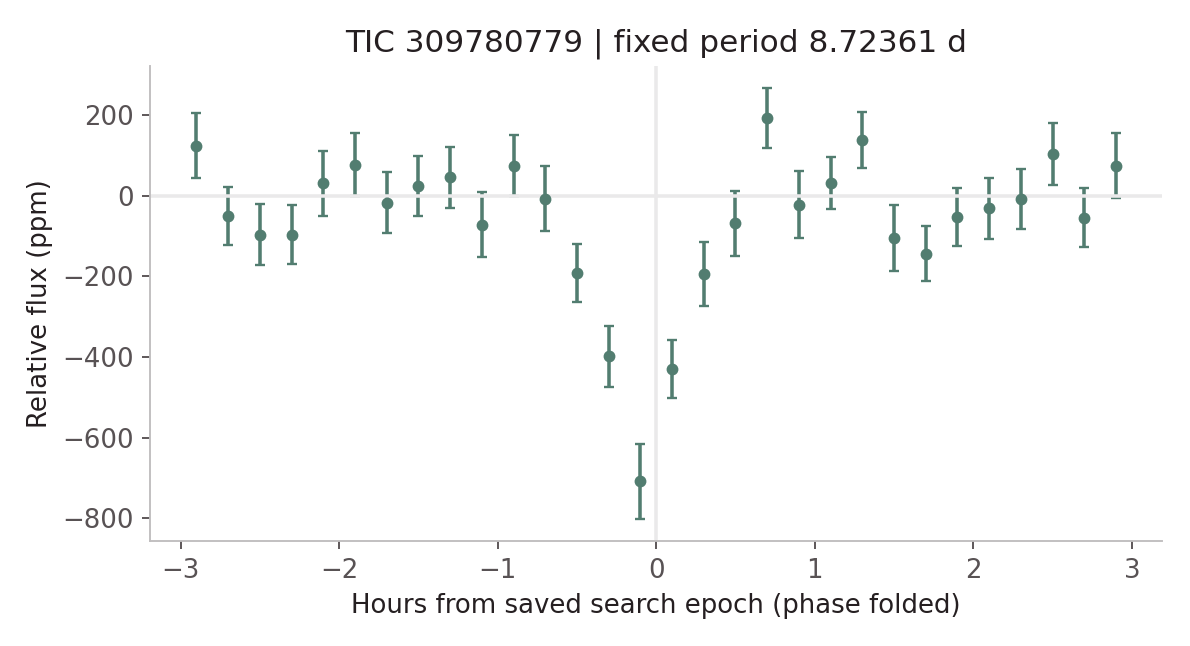
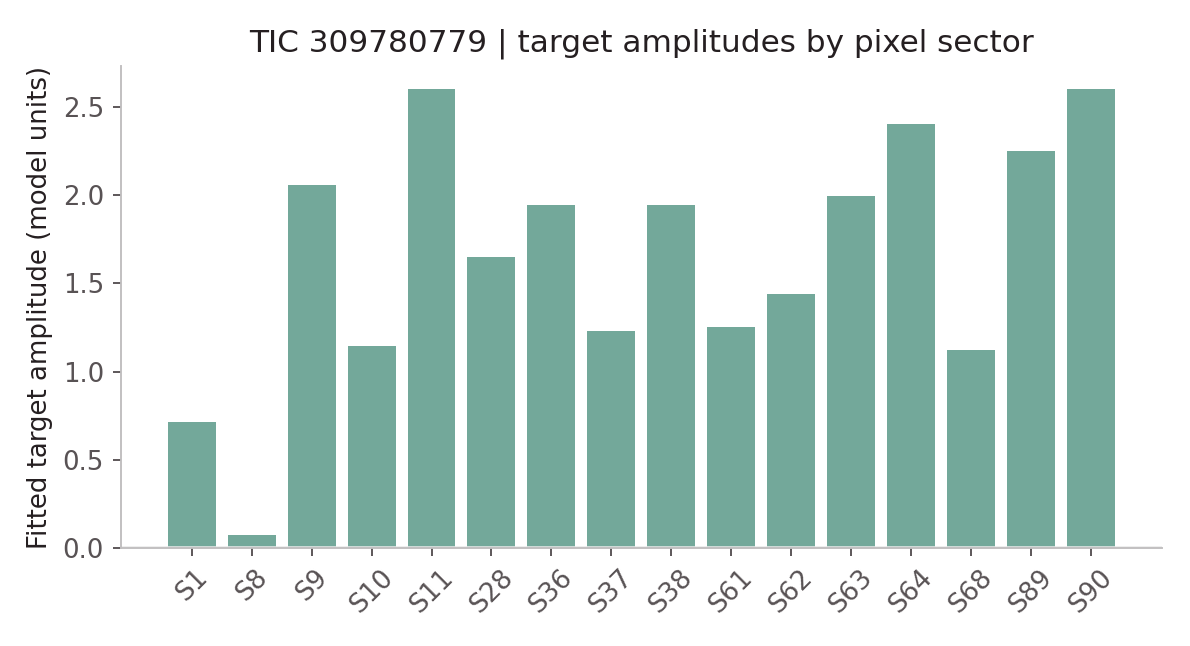
    Directly inspected saved outputs

    What TESS actually shows

    46events in the saved search
    45 / 16events / sectors in the pixel test
    3.61"centroid offset, 0.40 nominal sigma
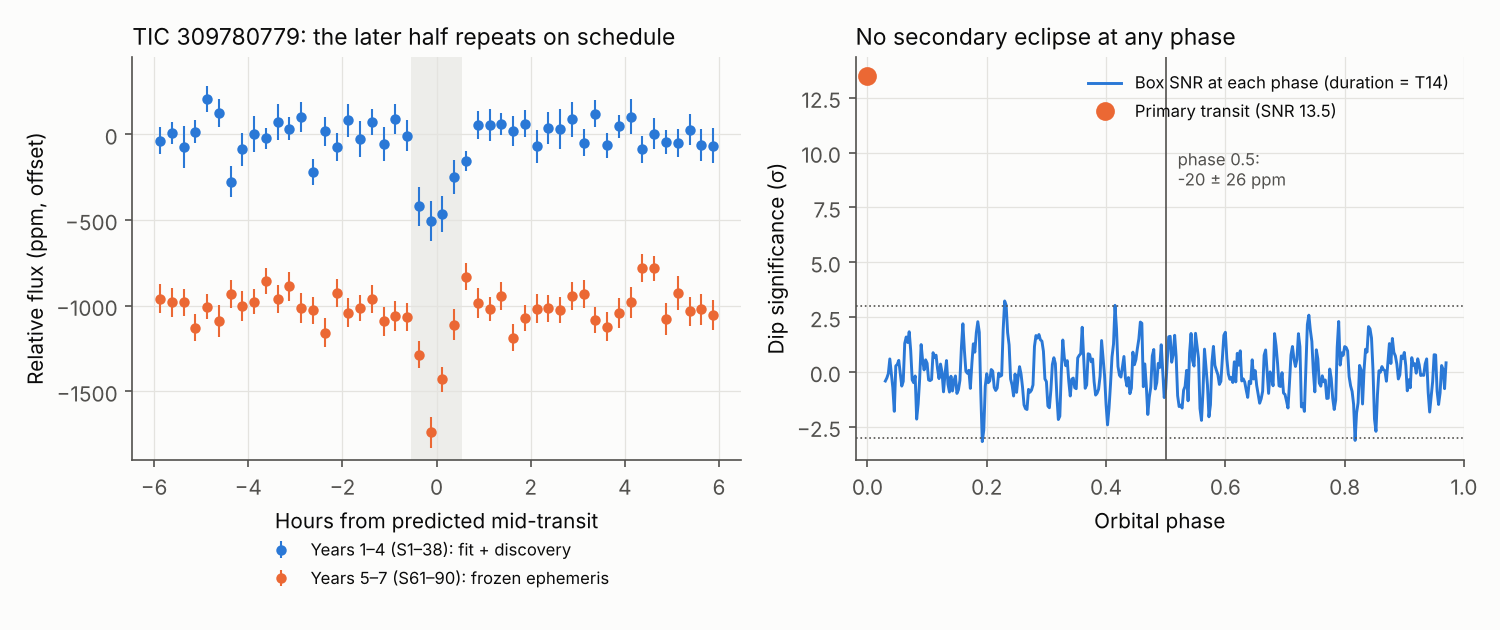
    TIC 309780779 phase-folded flux, showing a short dip at the saved search epoch
    Presentation plot at the saved period and epoch, using the saved 0.75-day cleaning method. Standard errors of binned flux are shown. This is not an independent search or held-out test. Bin values
    Positive fitted target amplitudes in all 16 TESS pixel sectors
    Saved pixel-source amplitudes are positive in 16/16 sectors. Their positivity supports consistency, not the probability of a planet. Pixel measurements
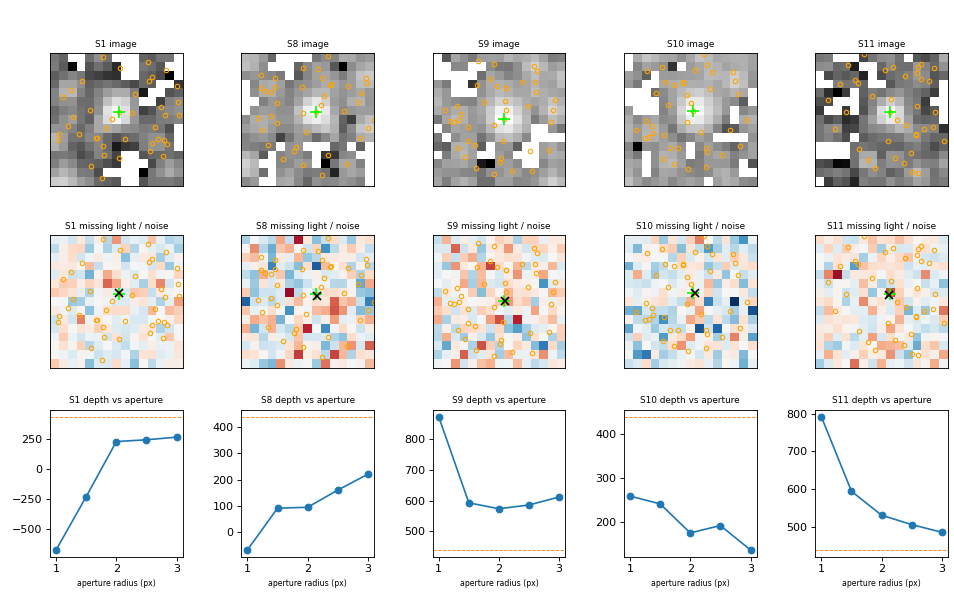
    Original difference images and aperture-depth tests for the first TESS sectors
    Crop of the original diagnostic: source images, missing-light images and aperture-depth curves. Depth is not flat with aperture radius in every sector. Full 16-sector diagnostic
    Original missing-light position near the TIC 309780779 target position
    Excerpt of the original joint source-position panel; open the full image for its complete labels. This uses an approximate Gaussian PSF, not an official TESS PRF. The nominal offset significance does not calibrate blend probability.
    The short duration needs explanation.

    A grazing geometry was suggested in an earlier fit, but its saved fit output is absent. We do not promote that suggestion into a measured impact parameter or radius. No formal FPP, completed independent holdout, or complete negative-control results are included.

    Counts, odd/even test and time conventions

    The cache has 17 sector labels and 92,860 cadences. The search counts 46 events; pixel localization uses 45 events in 16 sectors. These are different subsets. Odd/even depths differ by 1.33 sigma. That alone does not rule out an eclipsing binary. The saved depth_half_ppm is not a phase-0.5 secondary eclipse.

    Verify original FITS time conventions before scheduling any follow-up from the numeric epoch. The digest does not provide an observing schedule.

    Original Kepler evidence · 10–11 October record

    Historical evidence. The 11 October validation above supersedes earlier statements that formal FPP or holdout tests are missing.
    Saved measurements inspected / local aperture check reproduced

    The Kepler candidate

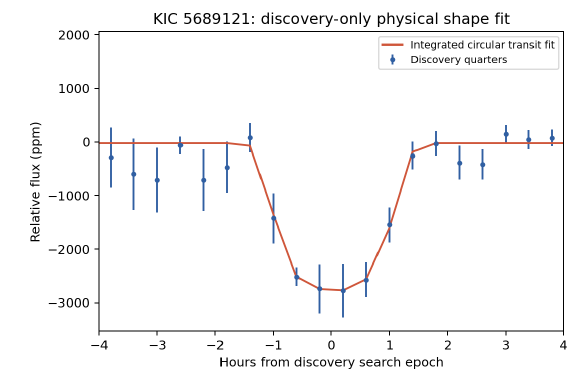
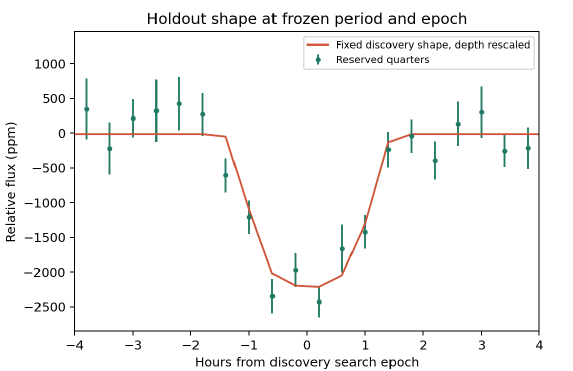
    The saved search code reserves the last four usable quarters before searching. The received discovery-only fit predicts their timing and shape. The original plots below are kept intact. We independently reran the supplied fixed-ephemeris aperture vetter on the original FITS, reproducing the corrected measurements.

    Original report discovery-only physical transit fit
    Original report held-out shape at frozen period and epoch
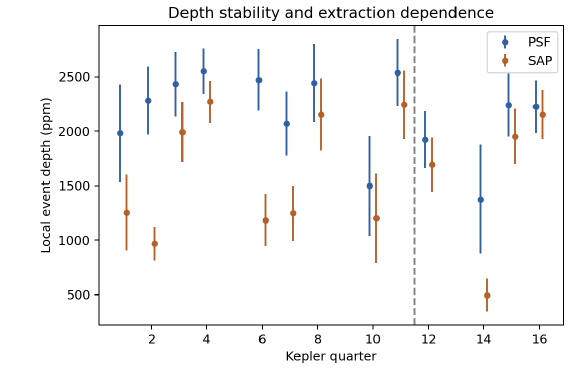
    Original report quarterly PSF and aperture depth stability
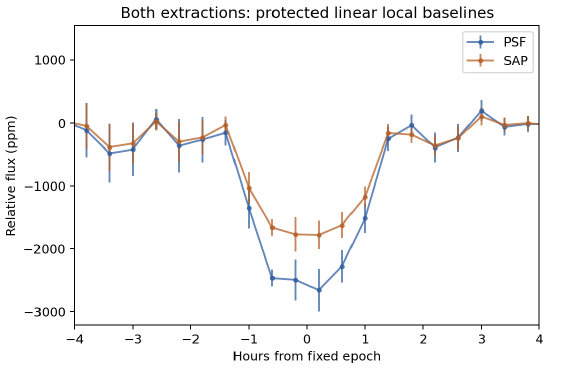
    Original report PSF and aperture extraction comparison
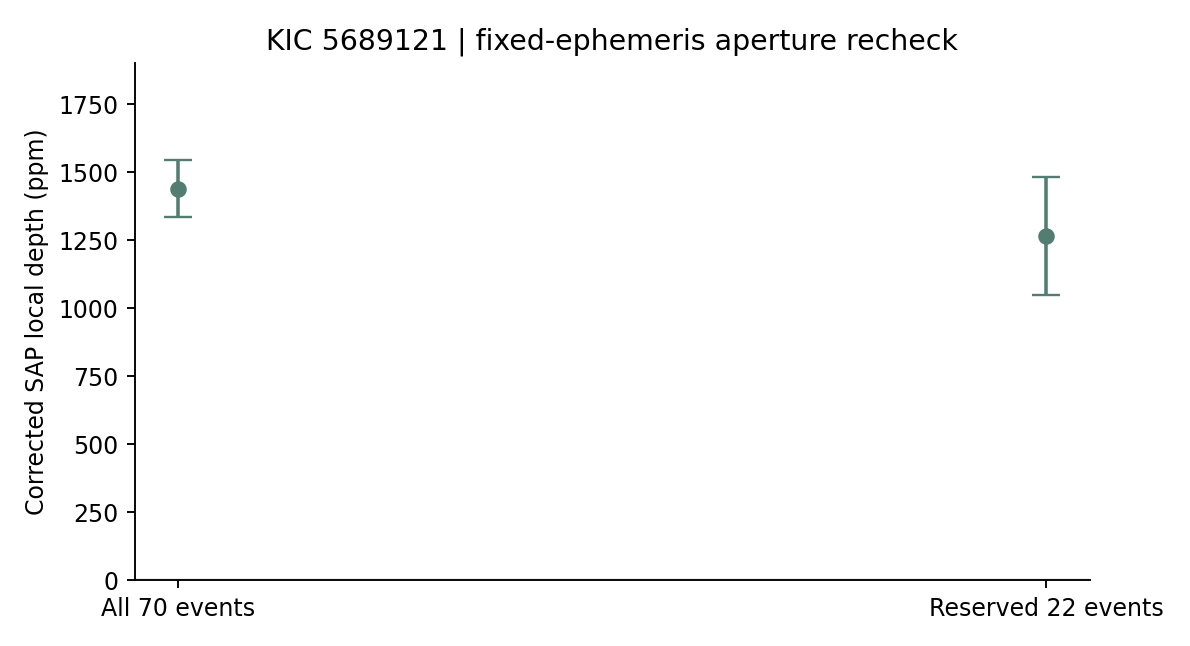
    Original report figure. 70 usable local PSF events, 22 reserved events. Corrected aperture local SNR: 13.73 overall, 5.84 held out. PSF and aperture use the same photons, not independent telescopes. Source PDF
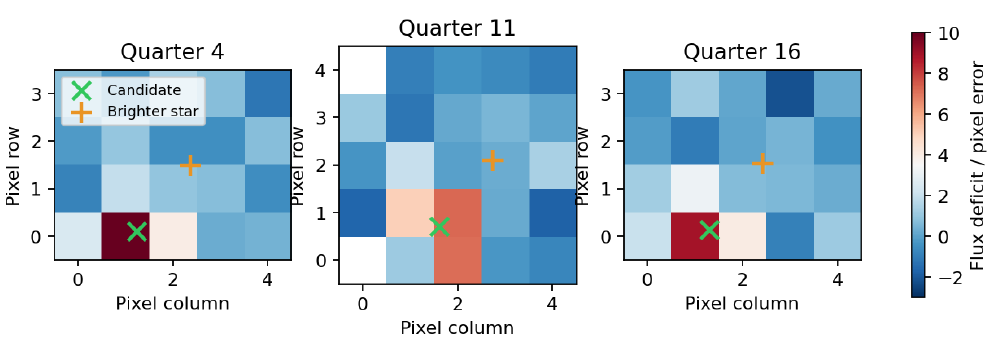
    Original Kepler difference-image crops marking candidate and brighter neighboring aperture primary
    The report favors the candidate over brighter KIC 5689116, 7.1 arcsec away, in all 13 observed quarters using official PRF templates. The quarter fits, pixels and calibration manifest are now received. The no-shift, spatial-plane stress test still prefers the target in 13/13 quarters, with summed delta-chi-square 579.27. This is not calibrated FPP.
    Reproduced corrected aperture depth overall and in reserved events
    Independent execution of the supplied local vetter using the original FITS and SAP_FLUX_ERR. Exact saved results reproduced. Same data and known ephemeris, not new blind validation. Complete recheck output

    Novelty is provisional

    The supplied audit reports no matching signal in its catalog snapshots or indexed literature checks. Kepler-169 e has a similar period but is 2.80 days out of phase. A prior possible MELANGE-3 membership is known. None of this proves exclusive discovery priority.

    Identity and novelty audit

    Still unexcluded

    Unresolved eclipsing companions, background blends, PRF systematics and correlated noise. No formal FPP, high-resolution imaging, reconnaissance spectra or new ground-based transit is reported. Corrected aperture depth: 1438.5 +/-104.8 ppm overall; 1264.6 +/-216.4 ppm in reserved data.

    Full archive audit and recheck
    Methods and early controls · 10–11 October record

    Historical evidence. The 11 October validation above supersedes earlier statements that formal FPP or holdout tests are missing.

    The work behind the leads

    The TESS extension

    Starting from the upstream nearby-star catalog, the extension distributed ranked target slices, cached two surviving light curves, sped up BLS candidate generation and tested the missing-light source with Gaia neighbors. The public record includes all received hit lists, the speed patch, corrected Gaia IDs, pixel outputs, coverage reconciliation and the failed 305054512 source hypothesis.

    Periods 1-25 days, 20-minute bins, five trial durations and one signal per star trade speed against sensitivity. The full historical environment and complete remote per-star result set are not shipped. Stored controls are incomplete. These limits stay attached to the claimed coverage.

    Coverage reconciliation · Exact speed/identity patches

    Codex's two-archive search

    The TESS wrapper uses per-season candidate generation, coherent refinement and a final-season split. Its Kepler Bonus expansion selects 64 bright eligible background M dwarfs from 1,800 catalog-cut sources, reserving the last 25% of usable quarters before period search. Both scans preserve input hashes and fixed-ephemeris checks.

    The complete code, dependency versions, search outputs, catalogs, held-out measurements and invalidated versions are retained. Full raw data are available in the three source archives. Known hosts and source reductions are not silently turned into fresh discoveries.

    Wrapper audit · Kepler pilot code
    Controls and implementation tests

    Known LHS 3844 b and Kepler-138 c/d were recovered as explicit positive controls. Strong synthetic transits test recovery, alternating-depth eclipses and single-event glitches. A held-out-flux replacement leaves the discovery ephemeris and search statistics unchanged in the wrapper smoke tests. That checks direct leakage, not survey completeness.

    Raw-flux local fits use exposure integration, out-of-transit baselines, empirical scatter, per-event and per-sector statistics, leave-one-event-out tests and conditional off-phase controls. Correlated phase controls do not estimate survey-wide FAP.

    Independent vetter · Synthetic results and parser repairs
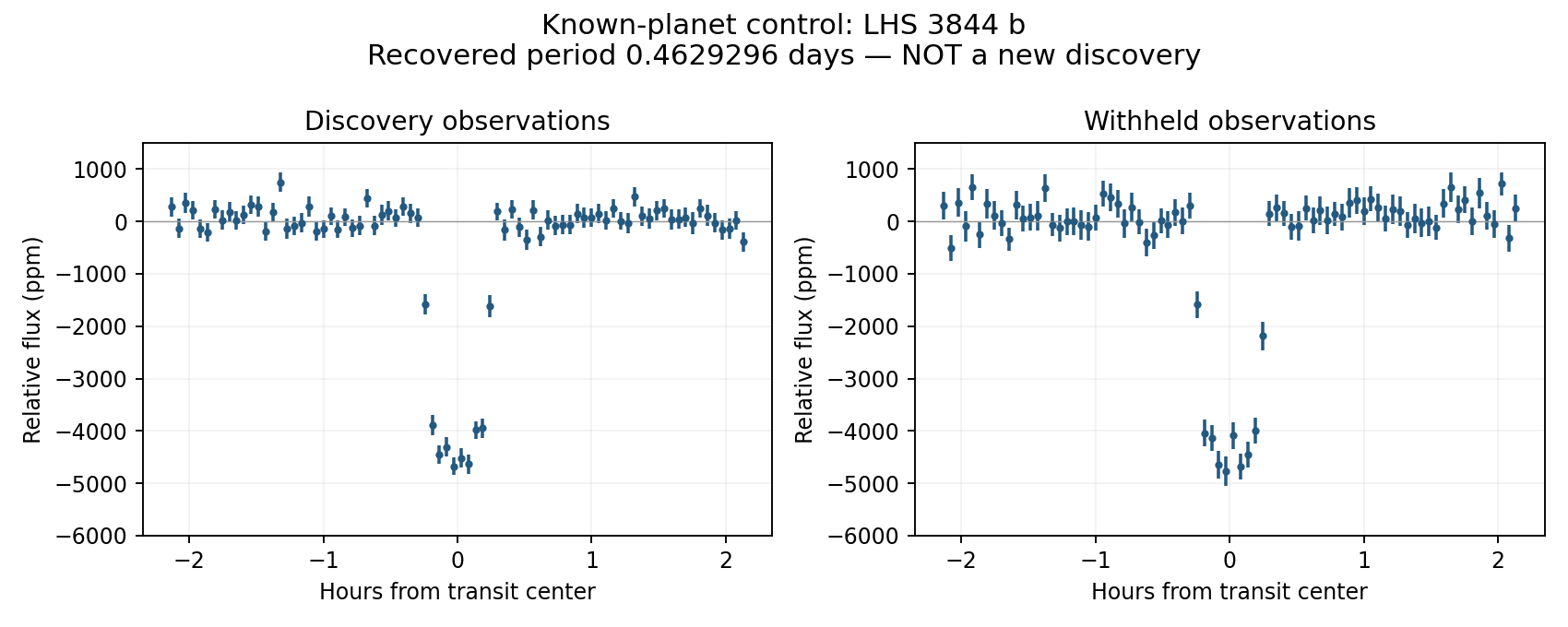
    Known LHS 3844 b control in discovery and reserved data
    Original known-planet recovery plot. This is a control, not a new candidate. Control measurements
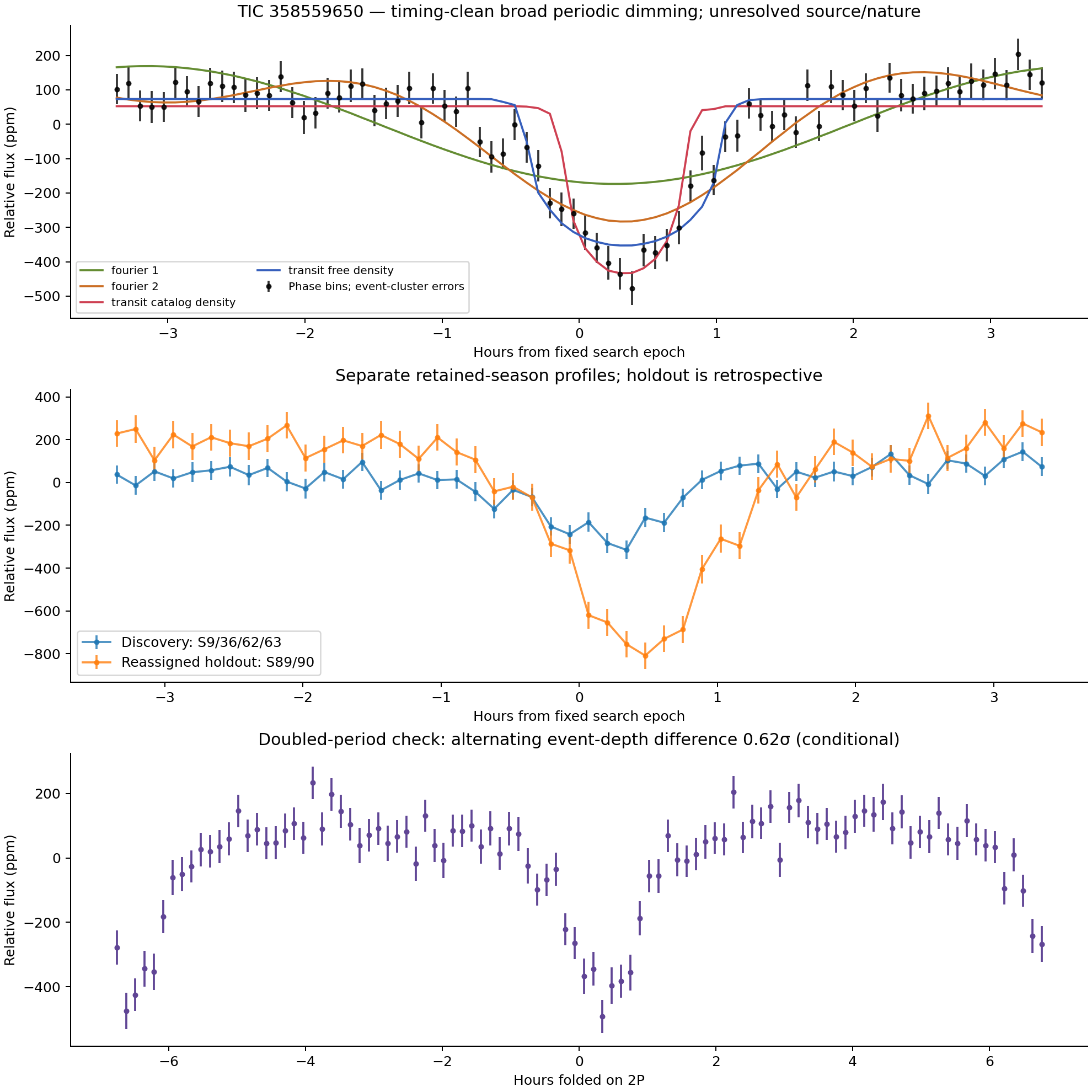
    TIC 358559650 timing-safe broad-signal shape comparison
    The reopened timing-clean signal persists, but broad shape and varying amplitude prevent a defensible planet detection. Final 44-star rerun dispositions
    All survivors, rejected hypotheses and superseded versions

    TIC 94753488 remains broad periodic dimming with unresolved source. TIC 456716455 is strongly baseline-sensitive. TIC 113710966 has residual modulation/alias concerns. TIC 244869034's timing-safe screen pass fails robust local/holdout checks. KIC 10794841 has secondary dimming and weak aperture support. Original v1 and pre-final results remain inspectable, not promoted to current conclusions.

    TESS signal-by-signal table · Kepler real/inverted table · Broad-signal review · Timing repair timeline

    Catalogs, novelty and archive expansion

    The record includes NASA confirmed/TOI snapshots, CTOIs, TCEs, eclipsing binaries, RAVEN, SIMBAD, Gaia variability and neighborhood/period checks. Conservative host exclusions do not prove a host unsearched elsewhere. Missing coordinates and proper-motion limits remain relevant. Candidate novelty is provisional.

    EVEREST/K2SFF, TGLC, CDIPS and PATHOS were investigated as future pools, not represented as completed scans. Alternate reductions of TESS exposures share photons. Catalog eligibility counts are not completed-search counts.

    Catalog audit and gaps · Attribution
    The extended Kepler search · 10–11 October record

    Historical evidence. The 11 October validation above supersedes earlier statements that formal FPP or holdout tests are missing.

    Extension: 1,672 more Kepler stars, with a null control

    Codex's own Kepler Bonus code was run unchanged on ranks 65-1800 of the same frozen selection (1,672 searched), with the last quarters reserved before searching and a matched inverted run on the same stars. Ranks 65-576: real 10 first-screen signals, inverted null 10. Ranks 577-1800: real 19 signals on 18 stars, null 22 on 19 stars. No excess over the null in either stage. In the second stage the strict-screen survivors are known false-positive neighbors (the KIC 4544570 field, KOI K06244.01) or deep 0.3-1% dips on G~18.5 background stars, likely blends. Three of the real hits also appear inverted, so they are variability, and KIC 9851000 is the eclipse of a known false-positive neighbor. Nothing approaches KIC 5689121. One faint 2.64 d signal (KIC 6629201) is unresolved and unlocalized. No candidate was named or submitted. Details, tables and scripts.

    10 / Sources & acknowledgements

    Sources / credits

    Observations: NASA Kepler and TESS. Photometry: Kepler Bonus (Martínez-Palomera, Hedges & Dotson). Sky: Pan-STARRS1 Surveys / STScI; DSS2 / STScI, AURA, Palomar and UK Schmidt; 2MASS / UMass, IPAC-Caltech; AllWISE / NASA, JPL-Caltech, UCLA. Astrometry: ESA / Gaia / DPAC. Image access: CDS Strasbourg, hips2fits and Aladin. Analysis tools include astropy, lightkurve, batman and emcee. Original observations retain their attribution and licensing.

    Survey image